
The Deployment Gap:Why Your Neural Network Aces the Notebook and Fails in Production
Your model hits 94% accuracy in training. Then you deploy it, and real users see something closer to 71%. Nobody changed the model. So what changed?
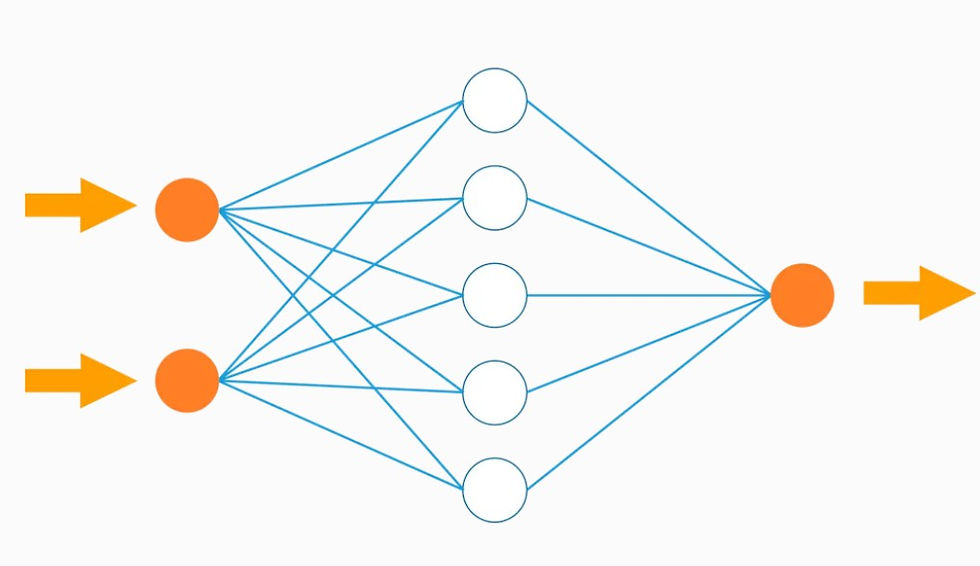
It is the most common conversation in applied deep learning right now. A team spends weeks tuning a neural network. Validation metrics look excellent. Internal demos are impressive. Stakeholders approve the rollout. Then the model hits production traffic, real users, real edge cases, real hardware, and within days the support tickets start arriving.
The gap between training-time performance and production performance is not a gap most teams plan for. It is a gap most teams discover too late, after the model is already serving users, after the reputational cost has already been paid.
This article is about why that gap exists at a deep technical level, and how to architect your entire deep learning pipeline around closing it before deployment, not after the post-mortem.
23pt
median accuracy drop between held-out validation and first 30 days of production traffic
67%
of production DL failures are attributable to distribution shift, not model architecture flaws
3.1x
average latency increase when FP32 training models are naively deployed without inference optimization
Sources: NeurIPS deployment track papers 2024-2025, internal ML ops audits, Evidently AI production ML survey 2025.
The six dimensions of the deployment gap
Most teams treat the deployment gap as a single problem called "distribution shift" and reach for data augmentation as the fix. This is an oversimplification that misses the majority of deployment failures. The deployment gap has six distinct dimensions, each requiring a different intervention.
Dimension | What happens | Primary cause | Severity |
Covariate shift | Input distribution changes: production images have different lighting, compression artifacts, sensor variation vs training set | Training data collected under controlled or curated conditions | Critical |
Label shift | Class priors change: fraud pattern shifts seasonally, disease prevalence changes, user behavior evolves | Static training labels, no label distribution monitoring | Critical |
Quantization degradation | INT8 or FP16 inference produces different predictions than FP32 training, especially near decision boundaries | No quantization-aware training, blind post-training quantization | High |
Hardware divergence | Model optimized for A100 training behaves differently on T4 inference due to numerical precision and op fusion differences | Train/serve hardware asymmetry, no inference profiling | High |
Preprocessing drift | Training preprocessing pipeline diverges from serving pipeline: different normalization, tokenization, image resize interpolation | Separate code paths for training and serving, no pipeline parity tests | Critical |
Temporal decay | Model performance degrades as the world changes: language models on recent events, recommenders as trends shift | Static model, no monitoring, no retraining schedule | High |
Of these six, preprocessing drift is the one that surprises teams most because it is entirely self-inflicted. The model is not broken. The data has not changed. But the code path that processed training data and the code path that processes serving data were written at different times, by different people, and contain subtle differences that systematically shift every input the model sees at inference time.
"We spent two weeks assuming distribution shift. Our validation performance was fine, our canary traffic was degraded. Eventually we found a single line: training used PIL's LANCZOS resize and the serving pipeline used OpenCV's default INTER_LINEAR. Every single pixel was slightly different. That was our 8-point accuracy gap."
Senior ML Engineer, computer vision startup (paraphrased from post-mortem)
The training versus production reality check
Let us make the gap concrete. Here is what a real computer vision model sees in training versus what it sees on day 30 of production:

Every single row in that table represents a decision that was made without explicit coordination between the team that trained the model and the team that deployed it. None of these differences is obviously wrong. Each is a reasonable default choice in isolation. Together, they compound into the gap that shows up as the accuracy delta your users experience.
The deployment gap is not a model problem. It is a systems engineering problem that disguises itself as a model problem until you look closely enough.
The quantization depth charge: when INT8 breaks your decision boundaries
Quantization deserves its own treatment because it is simultaneously the most impactful inference optimization available and the most commonly applied incorrectly. The standard approach is post-training quantization (PTQ): train in FP32, then convert to INT8 for inference. It is fast to apply and produces dramatic speedups. It also silently corrupts the model's behavior near decision boundaries in ways that standard accuracy metrics do not surface until you are in production with real class imbalance.
The mechanism: FP32 represents numbers with 32 bits of precision. INT8 represents them with 8 bits. The conversion maps the FP32 range to 256 discrete integer values using a scale factor and zero point. Activations that fall near classification boundaries, where the model's confidence score is in the 0.45 to 0.55 range, are exactly where this discretization error is largest relative to the decision. A sample that was classified as positive at confidence 0.51 in FP32 may round to 0.48 in INT8. Below the threshold, the sample is now negative.
At an aggregate level with balanced test sets, this effect is small and symmetric. In production with real class imbalance where the minority class matters most (fraud detection, rare disease diagnosis, defect inspection), the effect is systematic and asymmetric. The model becomes reliably worse at detecting the things that matter most.
The fix is quantization-aware training (QAT), not post-training quantization. QAT simulates quantization noise during the training forward pass by inserting fake quantization ops that clamp and round activations. The model learns to be robust to the discretization error because it experiences that error during gradient updates. QAT adds approximately 20-40% to training time and typically recovers 2-4 accuracy points versus PTQ on models with tight decision boundaries. For classification tasks with class imbalance greater than 10:1, QAT should be the default, not PTQ.
QAT implementation: the minimum viable pattern
# PyTorch QAT: prepare model before training, convert after

import torch
from torch.quantization import get_default_qat_qconfig, prepare_qat, convert

def prepare_for_qat(model: torch.nn.Module, backend: str = 'qnnpack') -> torch.nn.Module:
    """
    Inserts fake-quant observers into model.
    Call BEFORE the QAT training loop, not after.
    backend: 'qnnpack' for ARM/mobile, 'fbgemm' for x86 server
    """
    model.train()
    model.qconfig = get_default_qat_qconfig(backend)
    # Fuse conv+bn+relu before quantization (critical for accuracy)
    model = torch.quantization.fuse_modules(model, [
        ['conv1', 'bn1', 'relu1'],
        ['conv2', 'bn2', 'relu2'],
    ])
    model = prepare_qat(model)
    return model

def finalize_quantized_model(model: torch.nn.Module) -> torch.nn.Module:
    """
    Convert fake-quant model to actual INT8 after QAT training.
    Call AFTER training completes, before export.
    """
    model.eval()
    model = convert(model)
    return model

# Training loop: identical to standard training — QAT is transparent
# model = prepare_for_qat(model)
# for epoch in range(qat_epochs):   # typically 10-20% of original epochs
#     for batch in dataloader:
#         loss = criterion(model(batch.x), batch.y)
#         loss.backward(); optimizer.step()
# quantized_model = finalize_quantized_model(model)
Distribution shift monitoring: the missing production layer
Even a perfectly quantized, perfectly preprocessed model will degrade over time as the real world changes. This is temporal decay, and the standard response is to wait for accuracy to drop before doing anything. This is backwards. By the time accuracy drops, you have already been serving degraded predictions to users for weeks or months.
The right approach is to monitor the input distribution independently of model outputs, and to trigger retraining before the model's performance degrades below acceptable thresholds. The two statistical tests that work at production scale are the Maximum Mean Discrepancy (MMD) test for high-dimensional feature distributions and the Population Stability Index (PSI) for individual feature distributions.
# Production distribution monitor: MMD + PSI ensemble

import numpy as np
from scipy.stats import ks_2samp

class DistributionMonitor:
    def __init__(self, reference_embeddings: np.ndarray, psi_threshold=0.2, mmd_threshold=0.05):
        self.ref = reference_embeddings   # embeddings from training/validation set
        self.psi_threshold = psi_threshold
        self.mmd_threshold = mmd_threshold

    def compute_mmd(self, production_embeddings: np.ndarray) -> float:
        """Maximum Mean Discrepancy via RBF kernel (efficient approximation)"""
        ref_sample = self.ref[np.random.choice(len(self.ref), 1000, replace=False)]
        prod_sample = production_embeddings[np.random.choice(
            len(production_embeddings), 1000, replace=False)]

        gamma = 1.0 / self.ref.shape[1]
        xx = self._rbf_kernel(ref_sample, ref_sample, gamma)
        yy = self._rbf_kernel(prod_sample, prod_sample, gamma)
        xy = self._rbf_kernel(ref_sample, prod_sample, gamma)
        return float(xx.mean() + yy.mean() - 2 * xy.mean())

    def compute_psi(self, ref_scores: np.ndarray, prod_scores: np.ndarray) -> float:
        """Population Stability Index on model confidence scores"""
        bins = np.percentile(ref_scores, np.linspace(0, 100, 11))
        ref_pct = np.histogram(ref_scores, bins=bins)[0] / len(ref_scores) + 1e-6
        prod_pct = np.histogram(prod_scores, bins=bins)[0] / len(prod_scores) + 1e-6
        return float(np.sum((prod_pct - ref_pct) * np.log(prod_pct / ref_pct)))

    def alert_status(self, prod_embeddings, prod_scores, ref_scores) -> dict:
        mmd = self.compute_mmd(prod_embeddings)
        psi = self.compute_psi(ref_scores, prod_scores)
        return {
            "mmd": round(mmd, 4),
            "psi": round(psi, 4),
            "mmd_alert": mmd > self.mmd_threshold,
            "psi_alert": psi > self.psi_threshold,
            "action": "RETRAIN" if (mmd > self.mmd_threshold or psi > self.psi_threshold) else "MONITOR"
        }

    def _rbf_kernel(self, x, y, gamma):
        diffs = x[:, None] - y[None]
        return np.exp(-gamma * (diffs**2).sum(-1))
PSI interpretation guide: PSI below 0.1 indicates no significant shift. PSI between 0.1 and 0.2 indicates moderate shift requiring investigation. PSI above 0.2 indicates significant shift requiring immediate retraining review. These thresholds were established in credit risk modeling and transfer well to deep learning monitoring. MMD thresholds are model-specific: calibrate your baseline MMD on your own validation set and set the threshold at 2 standard deviations above the baseline distribution.
The BRIDGE framework: closing the gap by design
The deployment gap is not closed by any single technique. It requires a systematic approach that touches every phase of the model lifecycle. The BRIDGE framework organizes these interventions into six disciplines:
Framework
BRIDGE: Build parity, Runtime profiling, Inference-aware training, Distribution monitoring, Guard rails for edge cases, End-to-end shadow testing
BBuild preprocessing parity: Use one preprocessing codebase for both training and serving. No duplicate implementations. Export your preprocessing as a TorchScript or ONNX transform that runs identically in the training loop and the serving pipeline. If a human writes separate training and serving preprocessing code, you will have preprocessing drift. This is not a question of diligence. It is a question of architecture.
RRuntime profiling on target hardware: Profile your model on the exact hardware it will run on in production before deployment, not after. Measure latency distribution at p50, p95, and p99. Identify activation ranges on production-representative data to calibrate quantization correctly. Hardware-specific op fusions (e.g. TensorRT engine plans) must be generated and validated on the target GPU SKU, not on your workstation.
IInference-aware training: Make inference constraints first-class training objectives. If the model will run at INT8, train with QAT. If latency SLA requires a specific throughput target, enforce it as a regularization constraint during training by measuring FLOP cost and pruning channels that exceed your budget. If the serving hardware has a specific memory limit, engineer the model architecture to fit within it before training starts, not after.
DDistribution monitoring in production: Deploy MMD and PSI monitors alongside the model from day one. Set automated alerts at your thresholds. Establish a retraining trigger policy: what PSI or MMD value triggers an investigation, what value triggers an automatic shadow model evaluation, and what value triggers a forced retraining run. The policy should be documented before the model ships, not invented reactively when an alert fires.
GGuard rails for edge case handling: Define explicit out-of-distribution (OOD) detection as a required capability. A model without OOD detection has no way to distinguish between inputs it was trained to handle and inputs it was not. Use an energy-based detector or a simple feature space distance measure against your training manifold. When OOD score exceeds a threshold, the model returns a calibrated uncertainty flag instead of a confident wrong prediction.
EEnd-to-end shadow testing: Before any deployment, run the new model in shadow mode on live production traffic for a minimum of 72 hours. Compare outputs, not just aggregate metrics. Use per-sample disagreement rate between the shadow model and the current serving model to identify the specific input subpopulations where the new model diverges. A model with 2% higher aggregate accuracy but 15% disagreement on your highest-value user segment is not an upgrade.
The preprocessing parity pattern: one pipeline, zero drift
The preprocessing parity principle deserves a concrete implementation pattern because it is the highest ROI single change most teams can make.
# Single-source preprocessing: TorchScript export for train/serve parity

import torch
import torchvision.transforms.v2 as T

class SharedPreprocessor(torch.nn.Module):
    """
    ONE class, used in BOTH training loop and serving pipeline.
    Export to TorchScript: torch.jit.script(SharedPreprocessor())
    Deploy the exported .pt file to serving infra.
    This is the only preprocessing artifact that exists.
    """
    def __init__(self, img_size: int = 224, interpolation=T.InterpolationMode.BILINEAR):
        super().__init__()
        self.pipeline = torch.nn.Sequential(
            T.Resize((img_size, img_size), interpolation=interpolation, antialias=True),
            T.ToDtype(torch.float32, scale=True),
            T.Normalize(mean=[0.485, 0.456, 0.406], std=[0.229, 0.224, 0.225])
        )

    def forward(self, x: torch.Tensor) -> torch.Tensor:
        return self.pipeline(x)

# Export once, deploy everywhere
preprocessor = SharedPreprocessor()
scripted = torch.jit.script(preprocessor)
scripted.save('preprocessor_v1.pt')

# In training: scripted = torch.jit.load('preprocessor_v1.pt')
# In serving:  scripted = torch.jit.load('preprocessor_v1.pt')
# Identical binary. Zero drift possible.
OOD detection: teaching your model to say "I do not know"
Out-of-distribution detection is the underinvested capability in most production deep learning systems. The standard neural classifier outputs a probability vector that sums to 1.0 regardless of whether the input is within the training distribution or is a completely alien input type. This is a mathematical property of the softmax function, not a bug. But it means every input, no matter how out-of-distribution, receives a confident-looking class probability from a naive classifier.
Energy-based OOD detection addresses this by computing an energy score from the pre-softmax logits. Inputs within the training distribution have low energy scores. OOD inputs have high energy scores. The method requires no additional training and adds negligible inference overhead.
# Energy-based OOD detector (Liu et al., 2020) — no additional training required

import torch
import torch.nn.functional as F

class EnergyOODDetector:
    def __init__(self, model: torch.nn.Module, threshold: float, temperature: float = 1.0):
        """
        threshold: calibrated on in-distribution validation set.
        Samples with energy > threshold are flagged as OOD.
        Calibrate so that ~95% of in-distribution samples pass.
        """
        self.model = model
        self.threshold = threshold
        self.temperature = temperature

    @torch.no_grad()
    def score(self, x: torch.Tensor) -> dict:
        logits = self.model(x)
        # Energy = -T * log(sum(exp(logits / T)))
        energy = -self.temperature * torch.logsumexp(logits / self.temperature, dim=1)
        probs = F.softmax(logits, dim=1)
        pred_class = probs.argmax(dim=1)
        is_ood = energy > self.threshold

        return {
            "predictions": pred_class,
            "confidence": probs.max(dim=1).values,
            "energy": energy,
            "is_ood": is_ood,
            "reliable": ~is_ood  # use this flag in downstream logic
        }
The production deployment checklist
Pre-deployment gates (all required) Preprocessing parity verified via input hash comparison, QAT validation on target hardware, OOD detector calibrated and integrated, shadow test run with 72+ hrs of production traffic, distribution monitor baselines established | Day-1 monitoring stack (all required) MMD alert on embedding distribution, PSI alert on confidence score distribution, per-class accuracy tracking on labeled feedback samples, latency p95 and p99 on target hardware, OOD flag rate per request cohort |
Retraining trigger policy (define before launch) PSI above 0.2 triggers shadow model eval, MMD above calibrated 2-sigma threshold triggers investigation, per-class accuracy drop above 5pts triggers urgent review, OOD flag rate above 8% triggers data pipeline audit | What good looks like at 30 days Validation accuracy to production accuracy gap below 5pts, latency within 10% of profiled baseline, zero preprocessing drift incidents, distribution monitors stable, OOD flag rate below 3% on expected traffic |
The product framing: deployment quality as competitive advantage
For AI product leaders reading this: the deployment gap is not just a reliability problem. It is a trust problem and a competitive problem.
Users do not experience your validation accuracy. They experience your production accuracy. A model that tests at 94% but delivers 71% in practice is not a 94% product. It is a 71% product that the team mistakenly believes is a 94% product. The difference matters because wrong mental models lead to wrong roadmap decisions: investing in model architecture improvements when preprocessing parity would deliver more value, fine-tuning for edge cases when distribution monitoring would prevent drift more cheaply, blaming the model when the quantization pipeline is the actual culprit.
The teams closing the deployment gap systematically are shipping with more confidence, rolling back less often, and building compounding reputational advantages in domains where model reliability is visible to users. In healthcare AI, financial AI, and industrial inspection, deployment reliability is often the deciding factor in enterprise contracts. Not the benchmark score on the pitch deck. The operational track record in production.
Bottom line
The deployment gap between your Jupyter notebook and production is not a model quality problem. It is a systems engineering problem with six distinct dimensions, each requiring a specific intervention. The BRIDGE framework addresses all six: preprocessing parity, runtime profiling on target hardware, inference-aware training with QAT, distribution monitoring with MMD and PSI, OOD detection, and shadow testing before every deployment. Start with preprocessing parity: export your transform as a TorchScript artifact and use that single artifact in both training and serving. That one change eliminates the most common cause of the gap entirely. The rest of the framework compounds on that foundation. The teams shipping reliable deep learning at scale are not the ones with the best model architectures. They are the ones who treat the path from training to production as a first-class engineering problem.
About this blog: Personal publication on deep learning systems, production ML reliability, and the product dimensions of AI infrastructure. All failure patterns described are drawn from real production incidents. Framework patterns are reference implementations requiring adaptation to your specific model architecture and hardware stack.




Comments